
Lisa Quaschnick, REALTOR®
eXp Realty | DRE# 01702057
FREE CALIFORNIA GUIDE
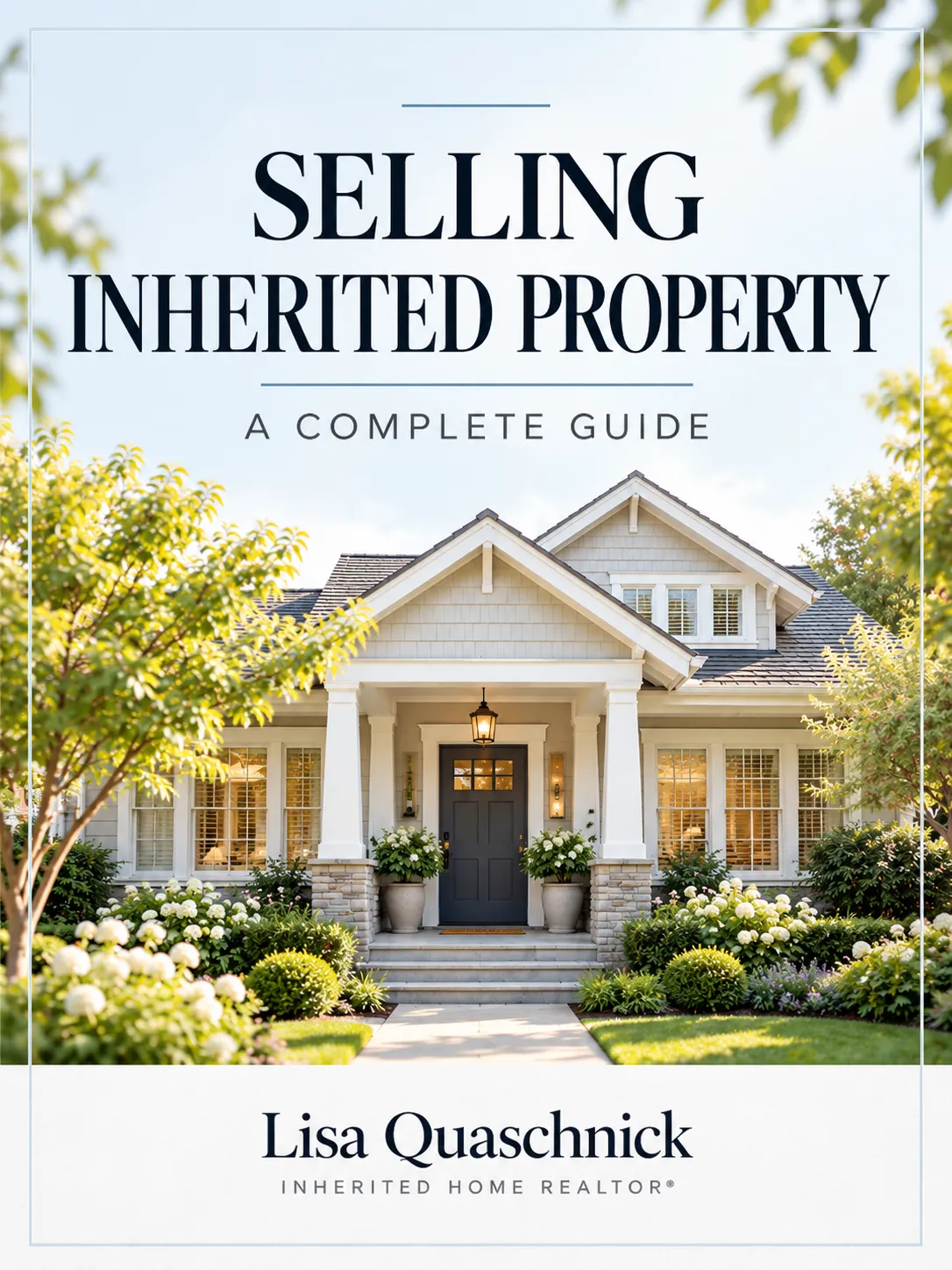
Selling Inherited Property in California
A practical handbook for heirs, Trustees, Executors, Administrators, and families trying to understand what happens next.
Selling an inherited property can involve much more than putting a house on the market. Ownership, probate, trusts, taxes, property condition, insurance, family decisions, and timing can all affect the process.
By submitting this form, you agree to receive the requested guide and occasional helpful real estate emails from Lisa Quaschnick. You may unsubscribe at any time.

Clear Guidance
Understand what to expect and the key decisions ahead.

California-Specific
Focused on California laws, property taxes, and local considerations.

Practical Next Steps
Know the right questions to ask and who can help.

Local Expertise
Guidance from a Greater Sacramento REALTOR® experienced with inherited-property sales.
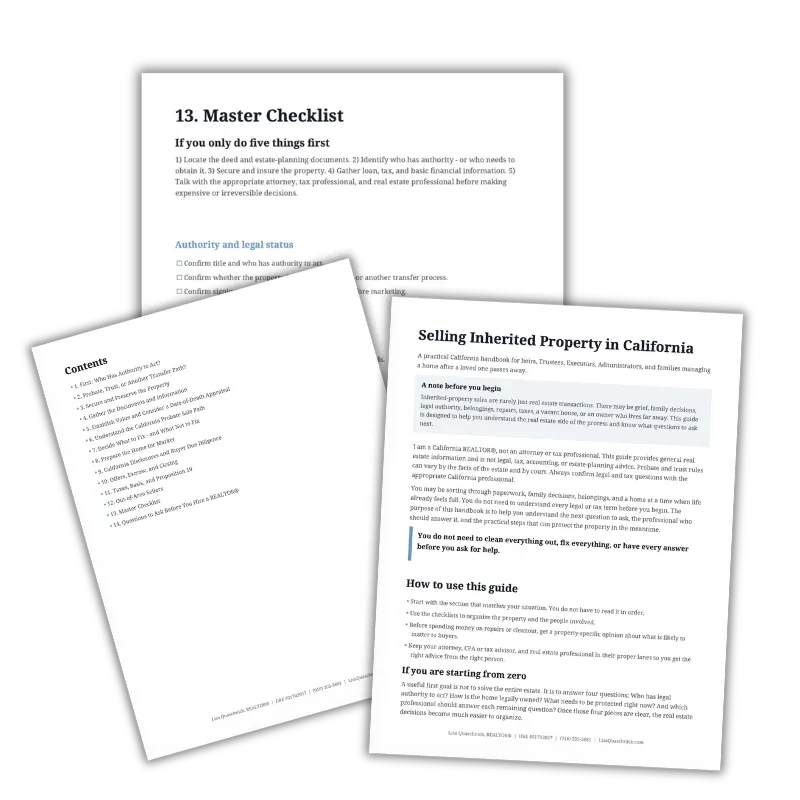
Inside the Guide You'll Learn:
How to determine who has authority to sell
What it means when property is held in a trust
When probate may or may not be required
What to know about Proposition 19 and property taxes
How inherited-property basis generally works
What to consider before making repairs
How to manage a vacant inherited property
What happens when heirs live outside the area
Questions to ask your attorney, CPA, and REALTOR®
You don't have to figure this out alone.
My goal is to give you clear information and a smoother path forward so you can make confident decisions about what’s next.
Common Questions About Selling Inherited Property in California
Do I need probate to sell an inherited property in California?
Not always. It depends on how the property is titled, whether it is held in a trust, whether there is a surviving co-owner, and the size and structure of the estate. A probate attorney can help determine which process applies.
What if the property is in a trust?
If the property was properly transferred into a trust, the Trustee may be able to sell it without going through formal probate. The trust document and title records should be reviewed first to confirm authority.
How does Proposition 19 affect inherited property?
Proposition 19 changed California’s parent-child property tax rules. In some cases, an inherited home may be reassessed to current market value unless an exclusion applies and the required conditions are met.
How are capital gains calculated when I inherit a home?
Inherited property generally receives a new tax basis based on the property’s fair market value as of the date of death, subject to applicable tax rules. Capital gain is typically based on the difference between that adjusted basis and the eventual sale price, less certain allowable costs.
What if the property needs repairs?
You do not necessarily need to fix everything before selling. Some repairs may protect value or affect financing, while others may not provide a worthwhile return. The best approach depends on the home’s condition, price point, buyer pool, and your goals.
Can I sell the property if I live out of state?
Yes. Many inherited-property sales are handled remotely. With the right local team, inspections, vendors, repairs, access, documents, and the sale itself can often be coordinated without you being physically present.
Who should I work with?
Depending on the situation, your team may include a probate or estate-planning attorney, CPA or tax advisor, title/escrow professionals, and a REALTOR® experienced with inherited-property sales.
Related Resources
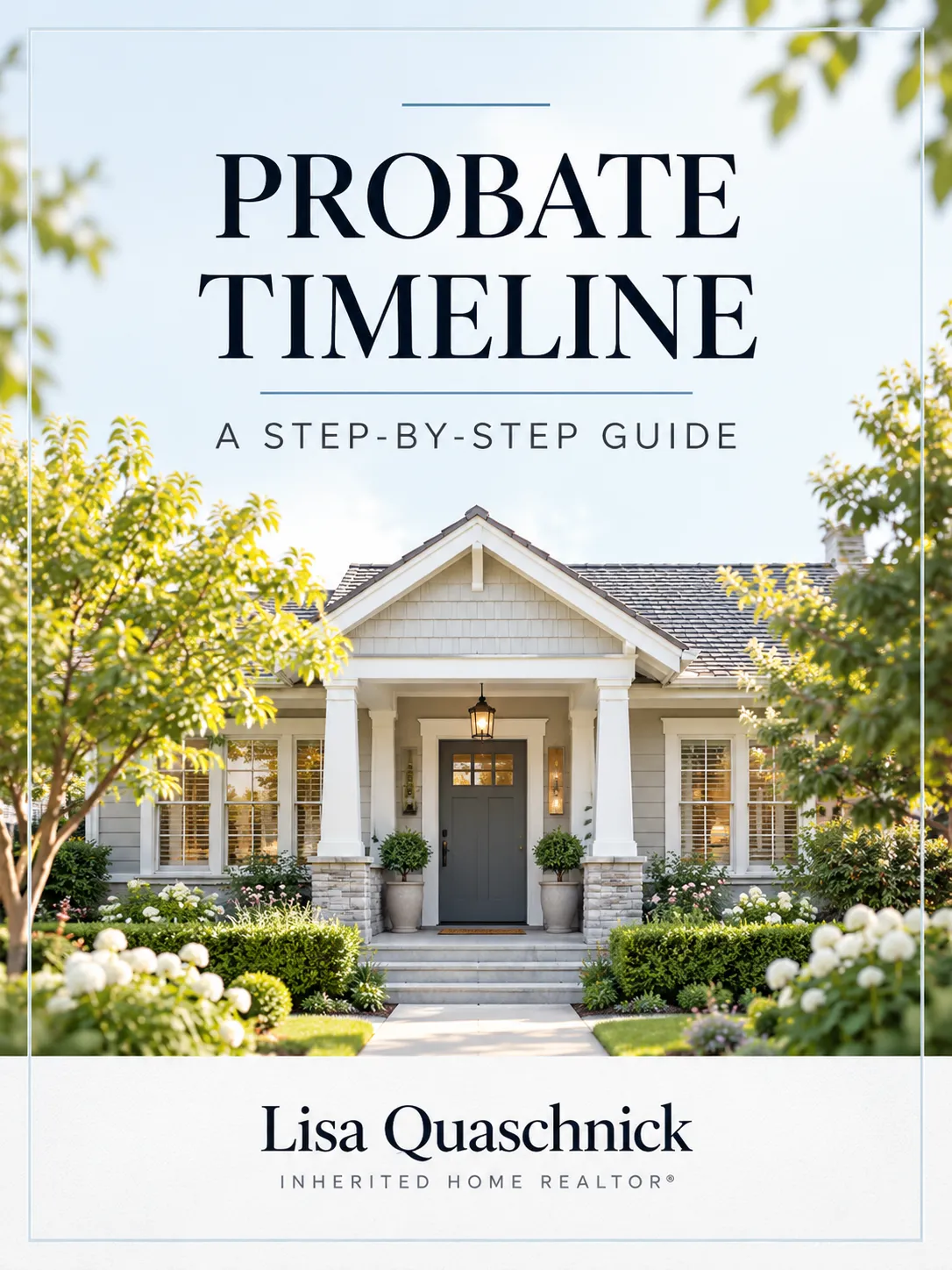
You may also find these free guides helpful:


Let's Talk About Your Situation
Every family's situation is different. If you have questions about an inherited property, I'm happy to talk through your. goals and options. There's no obligation and no pressure.
Serving Sacramento and surrounding communities