
Lisa Quaschnick, REALTOR®
eXp Realty | DRE# 01702057
FREE CALIFORNIA GUIDE
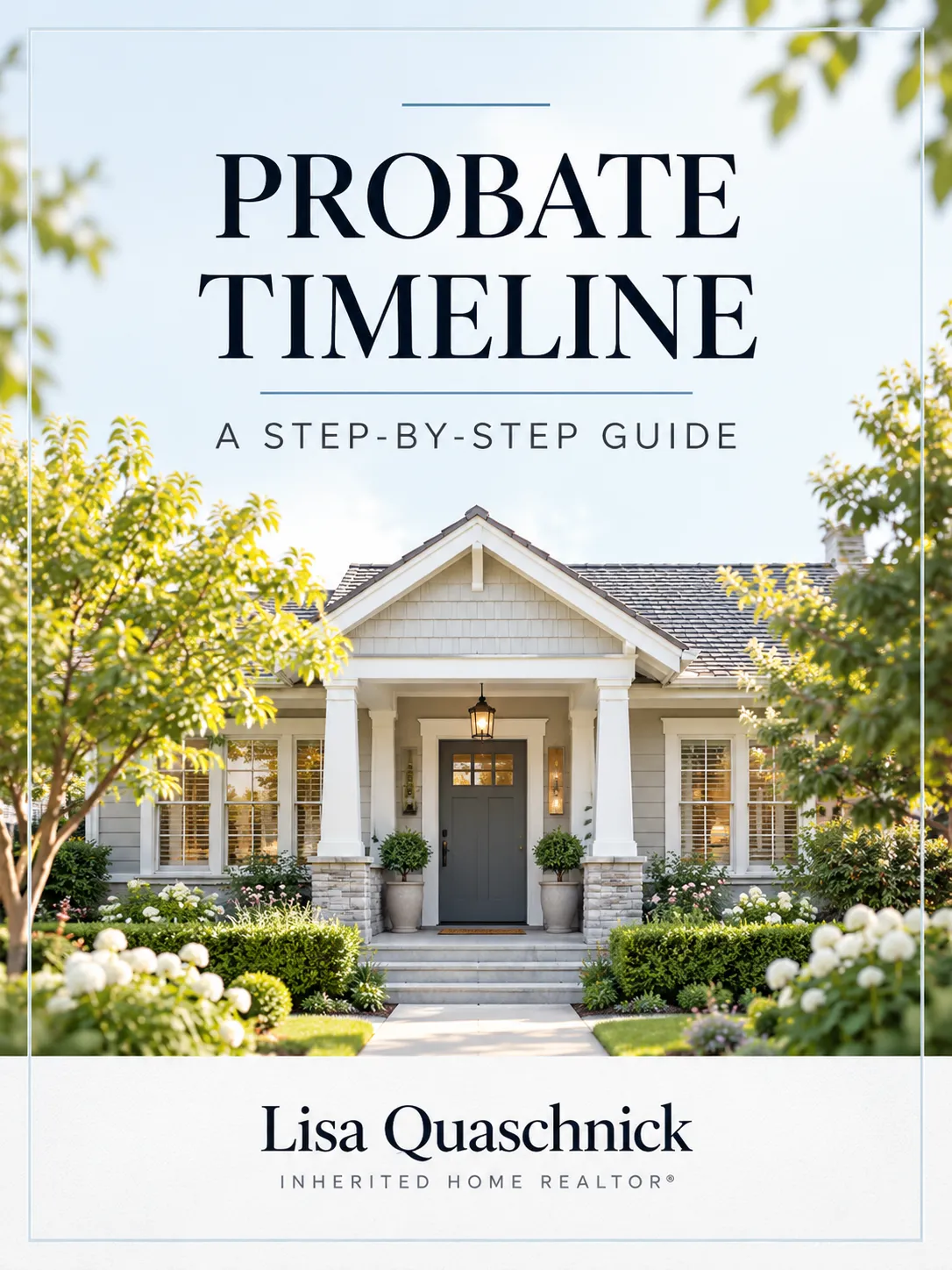
California Probate Timeline
A step-by-step guide to help you understand what may happen during the California probate process and when.
Probate can feel confusing when you’re trying to understand court filings, notices, property responsibilities, deadlines, and the eventual sale or distribution of an estate. This guide breaks the process into understandable stages so you have a clearer picture of what may come next.
By submitting this form, you agree to receive the requested guide and occasional helpful real estate emails from Lisa Quaschnick. You may unsubscribe at any time.

Clear Timeline
Understand what to expect and the key decisions ahead.

California-Specific
Focused on the process and terminology used in Northern CA.

Practical Next Steps
Know what may need attention at each stage.

LoProperty Guidance
Understand where the home fits into the probate process.
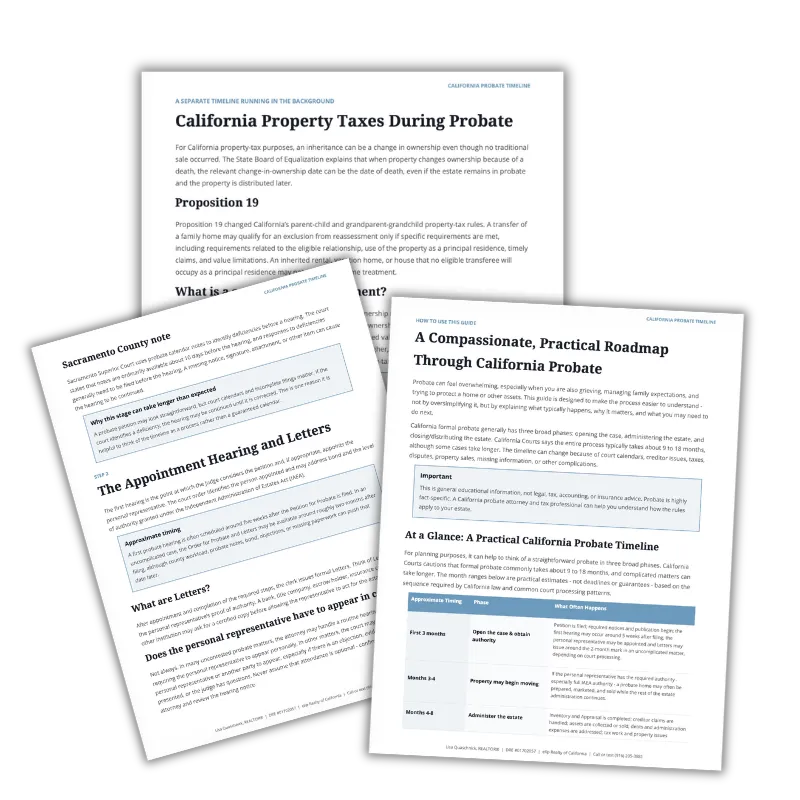
Inside the Guide You'll Learn:
What happens after someone passes away
When probate may be required
How a Personal Representative is appointed
What Letters Testamentary or Letters of Administration mean
Notice requirements and creditor periods
When estate property may be sold
Court confirmation and IAEA considerations
Typical timing from filing through distribution
You don't have to figure this out alone.
My goal is to give you clear information and a smoother path forward so you can make confident decisions about what’s next.
Common Questions About Probate in California
How long does probate usually take in California?
Many California probate cases take around a year or longer, depending on the court, the estate, creditor issues, property sales, and whether disputes arise.
Does the Personal Representative have to appear in court?
Sometimes. Many hearings can be handled remotely or by the attorney, depending on the county, the type of hearing, and whether the court requires the Personal Representative to appear.
Can a home be sold before probate is finished?
Yes, often it can. Once the Personal Representative has the proper authority, estate property may be sold before the entire probate case is complete.
What are Letters Testamentary or Letters of Administration?
These are court-issued documents showing that the Personal Representative has legal authority to act on behalf of the estate.
What is the Independent Administration of Estates Act?
IAEA can give a Personal Representative broader authority to handle certain estate matters, including some property sales, with less court involvement.
Does every probate sale require court confirmation?
No. Some sales can be completed without court confirmation, depending on the Personal Representative’s authority and how the sale is handled.
What can delay probate?
Common delays include court scheduling, creditor claims, missing documents, tax issues, disagreements among heirs, property problems, and complications with the sale of estate assets.
Related Resources
You may also find these free guides helpful:
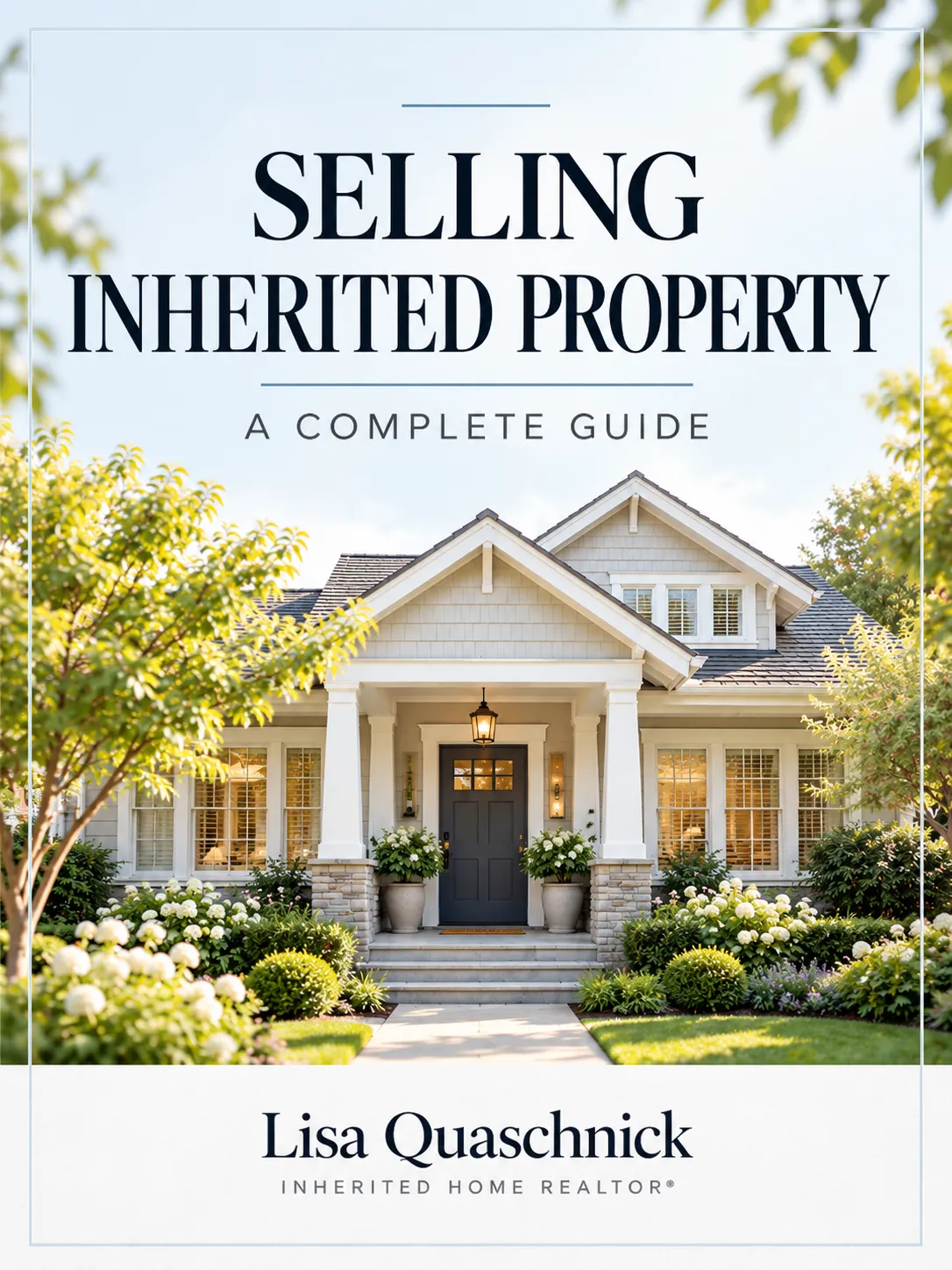
Selling Inherited Property
Understand key steps and decisions involved in selling an inherited home.


Let's Talk About Your Situation
Every family's situation is different. If you have questions about an inherited property, I'm happy to talk through your. goals and options. There's no obligation and no pressure.
Serving Sacramento and surrounding communities