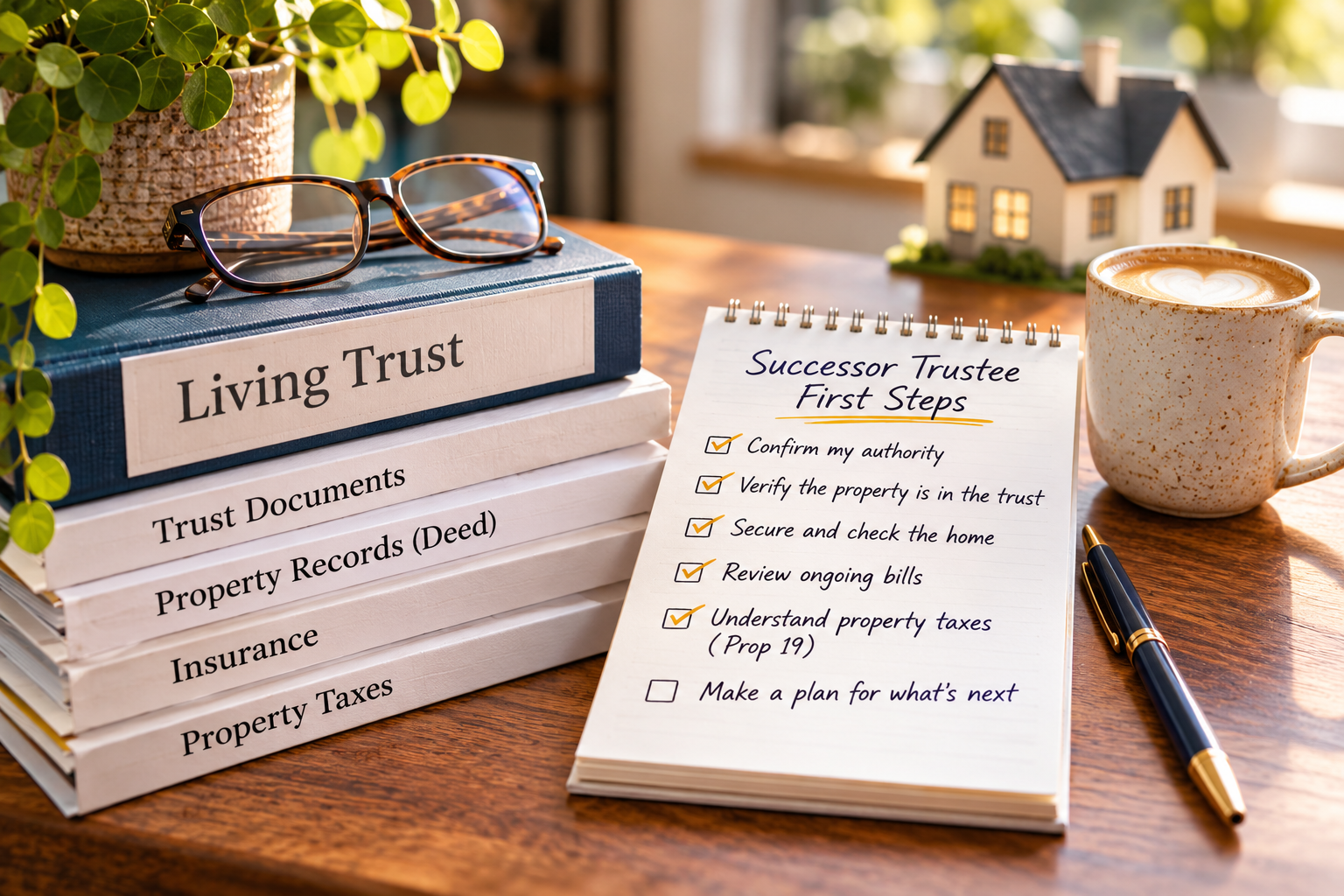
New Successor Trustee? What to Do About the House First
If you have just become the successor trustee of a California trust and there is a house involved, you may be wondering where to even begin.
The short answer is: do not start with selling the house. Start by confirming your authority, understanding what the trust says, and making sure the property is protected.
You do not need to solve everything in the first few days.
And honestly, trying to solve everything at once is usually where people get overwhelmed.
When I first look at an inherited property, I am not thinking about paint colors or staging.
I am thinking:
What needs attention right now?
That is where I would start.
What Does a Successor Trustee Actually Do?
A successor trustee is the person named to take over management of a trust when the original trustee can no longer serve, often because they have passed away.
If the home was properly transferred into the trust, the successor trustee can often manage the property according to the trust without opening a formal probate case.
California Courts explains that assets placed into a living trust generally pass according to the trust rather than through probate court.
The trustee still has responsibilities.
The trust document matters, and the trustee should understand what it says before making major decisions about the house.
If anything is unclear, this is a good time to speak with the trust attorney.
Step 1: Confirm That the House Is Actually in the Trust
This is one of the first things I would verify.
Do not assume that because someone created a living trust, the house was successfully transferred into it.
Look at the current deed.
The deed should show how title to the property is held.
For Sacramento County properties, the Sacramento County Clerk/Recorder maintains an online index of recorded documents, including deeds and deeds of trust.
Search Sacramento County recorded documents
The index can help identify recorded documents, although the actual documents are not viewable online through that search.
If the property is titled in the name of the trust or trustee, that is very different from a property that remained titled solely in the deceased owner’s individual name.
If the home was never properly transferred into the trust, additional legal steps may be necessary.
That is not something I would guess at.
Step 2: Make Sure You Have the Documents You Need to Act
Before calling vendors, insurance companies, banks, or title companies, make sure you understand who has authority to act for the trust.
You may need documents such as:
the trust
any amendments
certified copies of the death certificate
documentation showing your authority as trustee
Different institutions may ask for different things.
The important part is not to start signing agreements or giving instructions before your authority has been confirmed.
If you are unsure what you need, ask the trust attorney first.
Step 3: Secure the House Before Making Bigger Decisions
If the property is vacant, this moves way up my list.
Before worrying about cleanout companies, flooring, landscaping upgrades, or whether the house should be listed, make sure the property itself is okay.
I would check:
Are all doors and windows secure?
Does anyone outside the family still have a key?
Is there an alarm or security system?
Is mail piling up?
Are newspapers, packages, or flyers making the home look vacant?
Are the utilities still on?
Is the HVAC operating appropriately?
Are there any visible plumbing leaks?
Is the landscaping being maintained?
Is there a pool that needs regular service?
Does the insurance company know the property may be vacant?
A vacant house can develop problems quietly.
That is one of the things I have learned over the years.
The house can look perfectly fine from the street while something is getting worse inside or in the backyard.
A Real Example of Why I Check the Property First
I once went to a vacant home where I already knew there was an issue with the pool liner.
What had been described as a relatively small separation had gotten much worse by the time I saw it.
The pool was nearly drained, and the liner had pulled away from a significant portion of the pool.
At that point, the conversation was no longer about cosmetic updates or getting the house ready for market.
The immediate question was:
What needs to happen now so this does not turn into an even bigger problem?
That situation stuck with me because it is such a good example of why I want someone physically checking a vacant property.
A house can sit quietly while something changes very quickly.
And if you are the trustee responsible for the property, catching that problem early is part of protecting the asset.
Step 4: Do Not Start Cleaning Everything Out Yet
This one can be hard.
When families walk into a home filled with belongings, the natural reaction is often:
“We need to get all of this out of here.”
Maybe.
But not necessarily today.
Before hiring a cleanout company or giving things away, make sure you understand what the trust says and whether there are specific gifts of personal property.
There may also be family members who need an opportunity to identify items that belong to them or were specifically left to them.
And practically speaking, you may want photographs or documentation before anything is removed.
I have seen families put pressure on themselves to empty a house immediately when there was really no need to rush.
There is usually no prize for cleaning out the house the fastest.
Take a little time and make sure the right people are involved.
Step 5: Figure Out What Bills Are Attached to the Property
A house keeps generating expenses even when nobody is living there.
Make a list of ongoing costs such as:
mortgage payments
property taxes
homeowners insurance
utilities
HOA dues
landscaping
pool service
security
necessary repairs
You will also want to determine where the bills are going and whether anything is already past due.
The trustee needs a clear picture of the property’s ongoing expenses before making larger decisions about the home.
This is one of those unglamorous steps that matters a lot.
Step 6: Find Out Whether Property Taxes May Change
An inherited home can create property-tax questions, particularly under California Proposition 19.
If a child intends to keep the home and use it as a principal residence, the property may qualify for the parent-child reassessment exclusion if the requirements are met.
The Sacramento County Assessor explains that an heir generally must make the inherited family home their principal residence within one year for the exclusion to apply.
Read Sacramento County’s Proposition 19 information
Sacramento County also explains that only one eligible transferee needs to maintain the home as a principal residence.
Read Sacramento County’s Parent/Child Proposition 19 FAQs
If nobody intends to live in the home, reassessment may occur.
This is separate from capital gains taxes and separate from whether the house is in probate.
If keeping the property is being considered, it is worth understanding the property-tax consequences early rather than after the family has already made a decision.
Step 7: Understand That Reassessment Can Create a Supplemental Tax Bill
If the property is reassessed after a change in ownership, Sacramento County may issue a supplemental assessment.
That can result in an additional property-tax bill outside the regular annual tax bill.
The Sacramento County Assessor explains that when a property is reassessed, the county determines the fair market value as of the change-of-ownership date and calculates the difference between the new assessed value and the prior assessed value.
Read Sacramento County’s guide to supplemental assessments
This is worth knowing early, especially if the family is budgeting for ongoing property expenses.
A supplemental tax bill can be an unpleasant surprise if nobody knows to expect it.
Step 8: Get a Realistic Picture of the Home’s Condition
Before deciding whether to repair, renovate, rent, keep, or sell the house, find out what you actually have.
That does not mean you need to order every inspection imaginable on day one.
Start with a practical walk-through.
When I walk a vacant inherited home, I am not looking first at paint colors.
I am looking for anything that can get worse if nobody deals with it.
Look for:
roof leaks or water staining
plumbing problems
electrical concerns
HVAC condition
deferred maintenance
flooring damage
broken windows or doors
pest activity
exterior deterioration
obvious safety concerns
Then separate the issues into two groups:
Things that need attention now
and
Things that can wait until you know what the family plans to do.
That one distinction can prevent a lot of unnecessary spending.
Step 9: Do Not Assume You Need to Renovate Before Selling
This is one of the most common places families lose time and money.
A home that has not been updated in 20 or 30 years does not automatically need a full remodel before it can be sold.
Sometimes strategic repairs and cosmetic improvements make sense.
Sometimes selling the property as-is is the better financial decision.
And sometimes a modest amount of preparation produces a much better result than either extreme.
Before spending thousands of dollars, look at:
the home
the neighborhood
the likely buyer
the current market
the cost of the work
how long the work will take
the carrying costs while it is being completed
The question is not:
“What could we improve?”
There is always something you could improve.
The better question is:
“Which improvements are actually likely to help the trust?”
That is a very different question.
Can a Successor Trustee Sell the House?
Often, yes, if the house is owned by the trust and the trust gives the trustee authority to sell it.
But the exact language of the trust matters.
The trustee should also consider the trust’s instructions, beneficiaries, debts, taxes, and other obligations before selling.
Do not assume that being named successor trustee automatically answers every question about the sale.
When in doubt, have the trust attorney confirm the trustee’s authority before signing a listing agreement or purchase contract.
Does a House in a Trust Have to Go Through Probate?
Usually not if the property was properly transferred into the living trust before the owner passed away.
California Courts explains that assets placed into a living trust generally pass to the beneficiaries without going through probate court.
Read California Courts information about living trusts and probate
But the deed matters.
If the house was never transferred into the trust, additional legal steps may be necessary.
That is why confirming ownership is one of the very first steps.
How Quickly Should a Successor Trustee Act?
There is a difference between acting promptly and rushing.
Some trust-administration responsibilities may have legal deadlines, so the trustee should speak with the trust attorney early.
But deciding whether to renovate the kitchen this week is usually not one of those urgent decisions.
Handle the things that truly need attention first:
protecting the property
insurance
urgent repairs
ongoing bills
confirming legal authority
understanding the trust
Then give yourself enough information to make the larger decisions thoughtfully.
A Simple First-Week Checklist for the House
If you have just become responsible for a home as successor trustee, start here:
Confirm that you are the acting trustee
Locate the complete trust and amendments
Obtain certified death certificates
Verify how title to the property is held
Secure the house
Check insurance coverage
Keep necessary utilities operating
Check for leaks, damage, or urgent maintenance
Gather mortgage and property-tax information
Identify HOA obligations, if any
Avoid disposing of belongings until you understand the trust instructions
Start documenting expenses and property-related decisions
Talk with the trust attorney about legal deadlines and authority
You can work through the bigger questions after the property is safe and the legal foundation is clear.
You Do Not Have to Figure Out the Entire House on Day One
Becoming a successor trustee can feel like someone handed you a set of keys along with a very long list of responsibilities.
It is okay if you do not immediately know whether the house should be kept, rented, repaired, or sold.
Start with what you know.
Protect the property.
Understand the trust.
Gather the information.
Then make the next decision.
That is usually a much better approach than trying to solve everything at once.
Frequently Asked Questions
Can a successor trustee sell a house in California?
Generally, a successor trustee may sell trust-owned real estate if the trust gives the trustee that authority and the sale is consistent with the trustee’s responsibilities.
The trust document and property title should be reviewed first.
Does a successor trustee need probate court approval to sell a house?
Usually not when the property is properly held in a living trust and the trustee has authority under the trust.
Problems with title, trust ownership, or disputes may require additional legal steps.
Should a successor trustee clean out the house immediately?
Usually there is no need to rush.
First confirm the trust instructions, identify any specific gifts of personal property, document the contents, and make sure the appropriate family members and advisors are involved.
Who pays the bills on a house owned by a trust?
Property-related expenses are generally handled through the trust when appropriate and under the trustee’s authority.
The trustee should keep careful records and consult the trust attorney or CPA when questions arise.
Should the trustee repair the house before selling it?
Not automatically.
Repairs should be evaluated based on safety, property preservation, marketability, financing concerns, cost, and the likely benefit to the trust.